
Cost of Borehole Drilling in Nigeria 2024
In many parts of Nigeria, getting access to water suitable for consumption is still a major problem. Due to the inconsistent municipal water delivery systems, borehole drilling has gained popularity as a reliable water supply option for people, towns, and organizations.
Yet, some variables, such as location, depth, geological conditions, and the current state of the economy, affect how much borehole drilling costs in Nigeria. When it comes to borehole installation in 2024, it is important to comprehend these aspects.
Borehole drilling is the most efficient and common way to have a constant water supply. It can either be done through a manual drilling method or a heavy-duty drilling method.
Are you interested in Drilling a borehole in your home? Then this blog post is all you need. In this article, we shall dwell intensively on the Cost of Borehole Drilling in Nigeria in 2024, some factors affecting borehole drilling g costs, and other crucial information. Sit tight to digest this content.
Factors Affecting Borehole Drilling Costs
Before we proceed to the cost of Borehole Drilling in Nigeria in 2024, let’s examine some factors that affect borehole drilling costs in Nigeria. Some of these factors include;
1. Location: A key factor in figuring out the total cost is where the borehole will be dug. Transporting persons and equipment to remote locations may incur additional fees, which would raise the total cost. Further complicating matters and raising costs are accessibility problems in remote or challenging areas.
2. Depth of the Borehole: Drilling expenses are heavily influenced by the depth at which water is found. Drilling shallow boreholes is typically less costly than drilling deep ones. More sophisticated tools and knowledge are needed for deeper drilling, which raises the cost of both personnel and equipment. Furthermore, more complicated geological formations may be encountered in deeper boreholes, which would raise drilling costs even further.
3. Workforce For borehole drilling operations to be effective, skilled personnel is required. The cost of labor varies according to experience, skill, and current rates for labor. Labor costs are also influenced by the length of the drilling project; longer projects have greater labor costs.
4. Geological Location: The cost of drilling a borehole is largely determined by the geological condition of the area. Geological features found in different parts of Nigeria include crystalline rocks, alluvial deposits, and sedimentary basins.
Cost of Borehole Drilling in Nigeria 2024
The cost of borehole drilling in 2024 is highly dependent on the method you are using. There are two main methods of borehole drilling in Nigeria. Both methods are going to be discussed below:
Manual Borehole Drilling Method
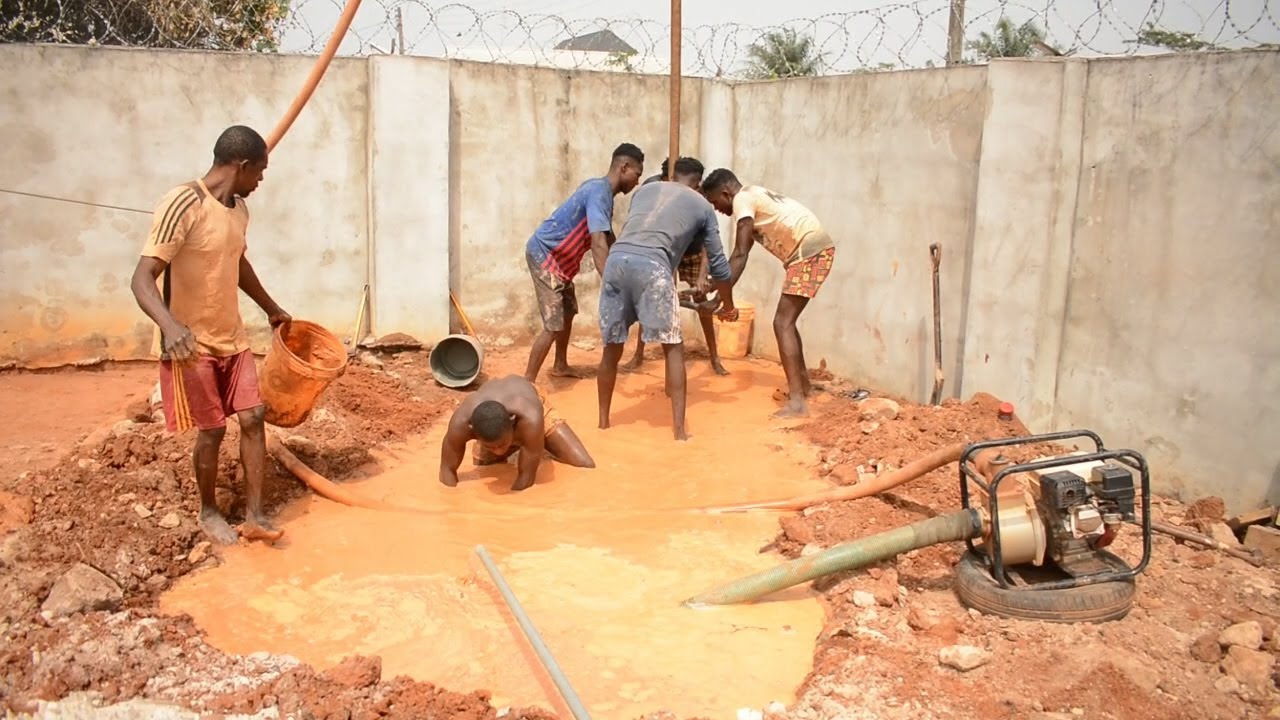
It takes time and several contractors to complete the hand drilling procedure. Depending on the location and the quantity of contractors, the typical cost ranges from ₦120,000 to ₦300,000. It may be completed in 7–14 days and typically requires 7–10 workers. It is the least expensive kind of digging a borehole. You may be charged by the borehole drillers by the hour, day, or meter. The prices that include the cost of digging a borehole per meter are more prevalent.
Robust or Heavy-Duty Borehole Drilling Method
Borehole drilling machines and other tools are used in the Heavy-duty method. Depending on the location and quantity of contractors, the average cost ranges from ₦250,000 to ₦650,000. It can normally be completed in three to seven days with just two or three people engaged in it.
Additionally, it’s been observed that this technique for drilling boreholes yields water that is cleaner than conventional techniques. Not to mention, it’s simpler and takes less time.
Types of Drilling Machines and Their Prices
| Machine Name | Price Range | Remarks |
|---|---|---|
| Crawler-mounted well drilling rig | ₦10 million – ₦32 million | It is very suitable for drilling boreholes in muddy areas (won’t get stuck). It can also be used to drill into rocks that are not too hard trailer trailer |
| Trailer-mounted well drilling rig | ₦4 million – ₦8 million | It can be used for air, foam, or mud rotary and percussive drilling according to different geological conditions |
| Tricycle-mounted well drilling rig | ₦4 million – ₦7 million | It can easily make turns and is very flexible. It can also be used for any water drilling, soil sampling, and even mining |
| Truck-mounted good drilling rig | ₦12 million – ₦40 million | It can be used to drill in places where there are hard rocks. It can also travel large distances of water |
| Water well core drilling rig | ₦8 million – ₦15 million | It has a high rotary speed. It also ensures faster and more effective drilling |
Benefits of Drilling a Borehole in Nigeria
1. Long-term investment:
A water borehole requires long-term investment to be drilled. It may be pricey, but with the right care, it can survive up to fifteen or twenty years. It would cost almost nothing to operate and maintain at that time. Maintaining a less expensive water system could be more expensive than the original expense of constructing a water borehole. Water from boreholes therefore is beneficial
2. Health benefits:
Digging between 100 and 200 meters below the surface yields pure, safe water. Typhoid, cholera, and other illnesses and disorders are prevented by this pure water. Most significantly, the water is safe to use for drinking, bathing, and other purposes and doesn’t require any additional filtration.
3. Easy to maintain:
A well-constructed borehole is very easy to maintain. There could be routine checkups from your servicing company which has minimal costs. You would only have to clean the storage of the water from time to time.
4. Constant supply:
One advantage of digging a borehole is that water never runs out. You could always have access to clean water if you had reliable power.
5. Saves money:
You’ll save money and time if your water supply is on your property. You won’t have to continuously pay someone to get you water. Moreover, you won’t need to use wells to obtain water. Selling a house with a drilled borehole, however, will increase profits and attract purchasers more quickly. Borehole drilling is a tool, not a liability.
6. One reliable source of income is drilling a borehole, which is another option. Customers in your community can buy water from you, which can generate revenue for you.
How to Save Money on Borehole Drilling
Some of the ways we can save money on borehole drilling are;
1. Bargain prices that will help you get the lowest possible price.
2. Have your electricity source like a solar panel to help you save costs for your business or household in general.
3. If your budget can’t get the heavy-duty method, make use of the manual method. The goal is to get a borehole with access to good water.
Wrapping up
Although installing a borehole in your home seems like a great idea, it comes with certain environmental risks. A geographic region that has an excessive number of boreholes is more vulnerable to natural disasters. This is the outcome of drilling creating a deep, narrow hole in the ground, which disturbs the soil.
Public water that is unfit for drinking or cooking is available in some places. To lessen the impact of problems obtaining clean water, residents in such places might choose to drill a borehole or dig a well.
